Furong Ancient Town
Furong Ancient Town is one of the most unusual places to visit in Western Hunan. Built beside the You River and centered around a spectacular waterfall, the old town combines Tujia stilt houses, mountain scenery, river-port history and the heritage of the ancient Tusi system.
Explore Furong Tours →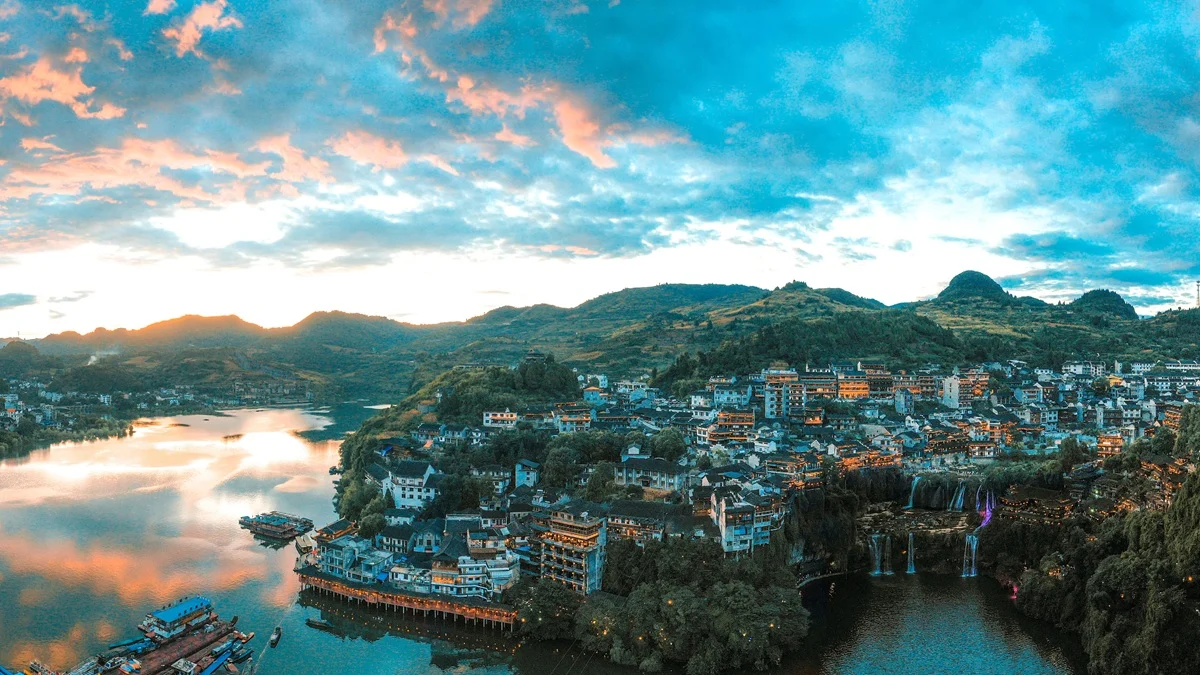
For travelers visiting Zhangjiajie, Furong Town is especially easy to add to a wider Western Hunan itinerary. It sits on the high-speed railway between Zhangjiajie and Fenghuang, making it possible to travel from Zhangjiajie to Furong Town and then continue south to Fenghuang without making a major detour.
The town is relatively small, but it is worth experiencing at two different times of day. During daylight, you can explore the old streets, stilt houses and waterfall from different viewpoints. After dark, the waterfall and houses are illuminated, giving Furong Town a completely different atmosphere.
If you are deciding whether to visit Furong Town, the simplest way to think about it is this:
- Zhangjiajie: is about mountains and spectacular natural landscapes.
- Furong Town: is about a waterfall, Tujia architecture and local history.
- Fenghuang: is about a larger riverside historic town, architecture, culture and its famous night scenery.
That makes Furong Town a natural middle stop rather than a substitute for either Zhangjiajie or Fenghuang.
Why Put Furong Ancient Town on Your Western Hunan Itinerary?
Furong Town works particularly well as part of a multi-stop journey through Western Hunan.
From Zhangjiajie West Railway Station, the high-speed train to Furong Town takes only around 20–30 minutes. From Furong Town, you can continue by high-speed train toward Fenghuang, so the three destinations can be combined into one route rather than visited as separate day trips.
The journey is also practical by private vehicle, especially if you want to stop at other places along the way.
A typical itinerary might look like: Zhangjiajie → Furong Town → Fenghuang
This route allows you to experience three quite different sides of Western Hunan:
- Zhangjiajie: mountains, pillar forests, cliffs and spectacular viewpoints
- Furong Town: waterfall, Tujia stilt houses and Tusi heritage
- Fenghuang: riverside historic streets, traditional architecture and Miao/Tujia cultural influences
Furong Town has increasingly become part of the international tourism circuit around Zhangjiajie and Fenghuang. In 2025, the town received more than 6.5 million visitors, while the number of foreign visitors increased significantly. In 2026, local authorities also began developing more inbound routes linking Zhangjiajie with Furong Town and other cultural destinations in Xiangxi (western Hunan).
What Makes Furong Ancient Town Different?
A Waterfall at the Heart of the Town
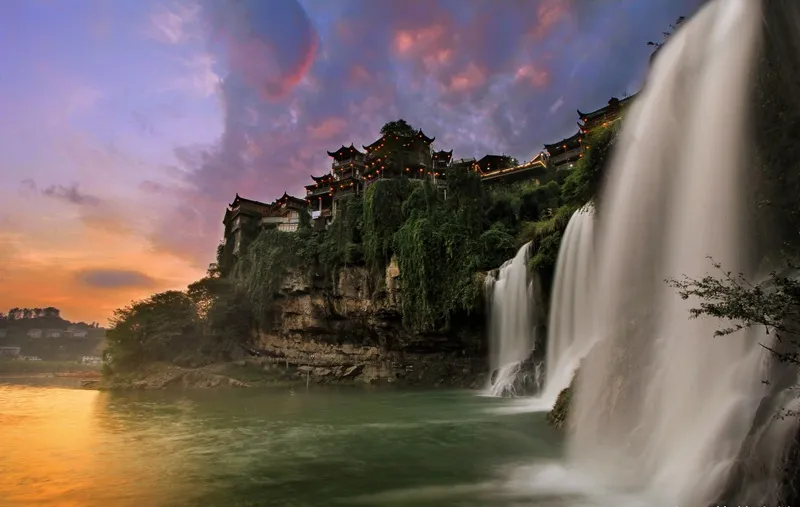
The most obvious difference is also the most important one: Furong Town has a major waterfall running through the historic town itself.
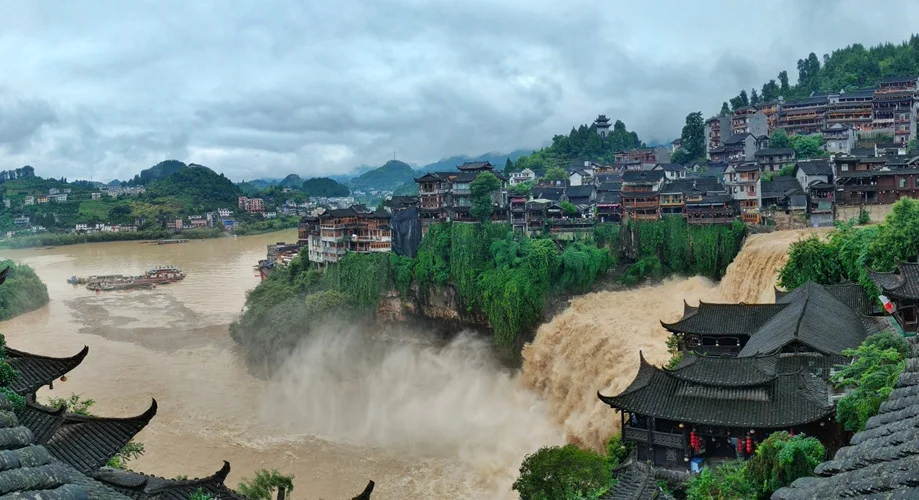
The waterfall drops toward the You River below the old town, with traditional stilt houses built along the surrounding cliffs.
From several parts of the old town, you can see the water falling below the houses. A walking path also takes visitors behind the waterfall, allowing you to experience the spray and sound of the water at close range.
This relationship between the waterfall, river and traditional buildings is what gives Furong Town its distinctive character.
Tujia Diaojiaolou: Architecture Adapted to the Mountains
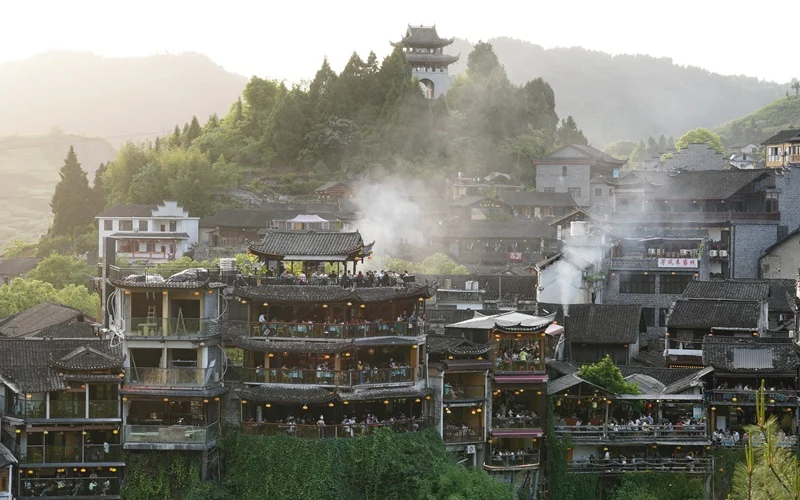
The old town is also known for its diaojiaolou, the traditional wooden stilt houses associated with the Tujia people.
Built along steep terrain and beside the river, these houses are not simply decorative buildings. Their form reflects the geography of Western Hunan, where settlements historically had to adapt to mountains, rivers and limited flat land.
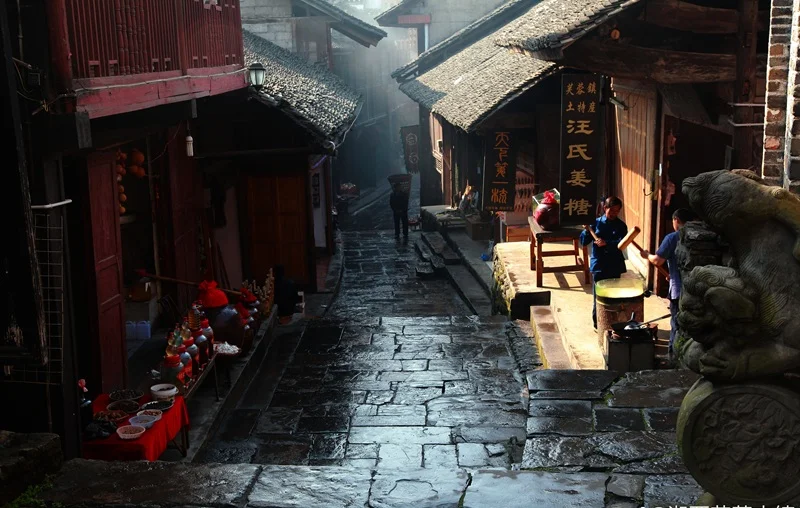
Walking through the old streets, you will see wooden houses, narrow lanes, balconies and buildings extending along the hillside.
An Ancient River Port and Tusi History
Furong Town was historically known as Wangcun and developed as an important settlement beside the You River.
Its history is closely connected with the Tujia people and the Tusi system, through which hereditary local rulers governed many ethnic minority areas of southwest China for centuries.
Wangcun was also associated with the former residence and administrative center of the Xi Zhou Tusi. For visitors interested in the history of Western Hunan, this gives Furong Town a cultural dimension that goes beyond its scenery.
A Brief History of Furong Ancient Town
Furong Town has a history of more than 2,000 years and was originally known as Wangcun.
The settlement developed beside the You River and became an important river port in western Hunan. During different historical periods, it served as an important political and commercial center in the region.
During the Tusi period, Wangcun was closely associated with the Xi Zhou Tusi administration. The region's Tusi heritage remains an important part of local history today.
The town became widely known throughout China after the 1986 release of the film Furong Town, which was filmed here. The success of the movie brought national attention to the previously little-known mountain town.
In 2007, Wangcun was officially renamed Furong Town, adopting the name by which it is now known.
Today, the town is commonly described as “the thousand-year-old town hanging on a waterfall.” The phrase is particularly fitting because the old buildings seem to rise directly from the cliffs around the waterfall.
Furong Waterfall: The Heart of the Town
The waterfall is the natural centerpiece of Furong Town and the main reason many visitors come here.
The water flows down from the surrounding mountains before dropping toward the You River. Its appearance changes with the season and rainfall, so the amount of water you see can vary considerably.
Historically, the waterfall was already one of Wangcun's most recognizable natural features. The Tujia people call it Dragon Spit Waterfall. Legend says it is the water of life summoned by the Tujia ancestors, and its sound was traditionally described as one of the defining features of the old town.
A Qing-dynasty scholar, Zhang Jinyong, once described the waterfall in a poem as water coming from the distant heights with a sound that could be heard day and night.
Today, the waterfall remains the visual center of Furong Town.
Walk Behind the Waterfall & Viewpoints
Walk Behind the Waterfall
One of the most memorable parts of the visit is the walkway behind the waterfall. Rather than viewing the falls only from a distance, you can walk directly behind the curtain of falling water. Depending on the season and water volume, the spray can be quite strong.
Tip: Wear shoes with a reasonable grip, and protect cameras or phones if the weather is wet.
Four Viewpoints You Should Not Miss
1. The viewpoint above the old town
From higher ground, you can see the waterfall, You River and the traditional houses together. This is one of the easiest places to understand the geography of Furong Town.
2. The riverbank below the waterfall
The lower viewpoint gives you a much stronger sense of the scale and sound of the falls.
3. A cliffside balcony
Some traditional-style buildings and accommodation have balconies or terraces facing the waterfall. These are particularly attractive in the late afternoon and after dark.
4. The walkway behind the waterfall
This is the most immersive viewpoint. You are surrounded by rock, falling water and mist, with the old town visible through the spray.
Furong Town by Day and by Night
Furong Town changes noticeably after sunset.
During the Day
Daylight is the best time for exploring the historic side of the town. You can walk through the old streets, look at the Tujia architecture, visit the waterfall from different angles and learn more about the history of Wangcun and the Tusi period. The atmosphere is generally more relaxed during the afternoon, especially if you arrive after the busiest part of the day.
At Night
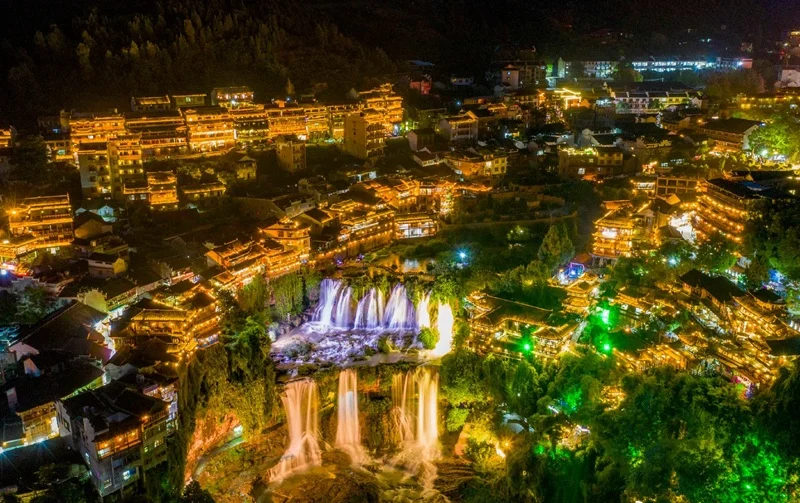
After sunset, when the ancient town’s lighting system is switched on, the entire scene changes dramatically. Red lanterns hanging from the stilted houses, lights along the cliff face, and colorful lights illuminating the waterfall all come on together. Water pours down through the lights, while the river reflects the glow on its surface.
At night, visitors tend to gather around the waterfall and Tuwang Bridge. At the Baishou Hall, Tujia folk performances are held, with the Baishou Dance and the ancient Maogusi Dance performed one after another. The large-scale live show The Blossoming Furong · Bizika Carnival uses the stilted houses and waterfall as its natural stage, telling stories of Tujia mythology, weddings, and traditional rituals. It is suitable for visitors who want a deeper experience of Tujia culture and folk traditions.
The atmosphere at night is more dreamlike, but also noisier and more crowded. If you stay inside the ancient town, you can wait until the performances are over and return to the waterfall late at night. Once the crowds have left, you can quietly experience another side of Furong Town, with only the roar of the waterfall and a few scattered lights remaining..
A Different Kind of Nightlife
For younger travelers and couples, there is another reason to stay after dark. Around the cliffside and riverside parts of the old town, you will find small bars and relaxed music venues, some located in traditional-style buildings with terraces overlooking the river or illuminated town.
Furong's nightlife is not the same as Fenghuang's. You should not expect a large, continuous bar street or a major club scene. Instead, it is more about sitting with a drink, listening to music and enjoying the view. For couples or younger travelers who like a relaxed evening rather than loud nightlife, this can become an enjoyable part of an overnight stay.
How Long Should You Stay in Furong Town?
The right amount of time depends mainly on whether you want to see the town after dark.
2–3 Hours
This is enough if you only want to: walk through the old town, see the waterfall, walk behind the waterfall, take a few photographs, and continue to your next destination. If you are short on time, Furong can work as a brief stop between Zhangjiajie and Fenghuang.
Half a Day
A half-day visit gives you more time to explore the old streets, viewpoints and waterfall without rushing. This is a good option if you are not particularly interested in nightlife or staying overnight.
Recommended: Arrive in Afternoon & Stay Overnight
If your schedule permits, this is the way we recommend experiencing Furong Town. Arrive in the afternoon, explore the old town and waterfall while there is still daylight, have dinner locally, then return to the waterfall and riverside area after dark. You get to see the town in two completely different moods without having to rush for the last train or leave just as the lights come on.
How to Combine Furong Town with Zhangjiajie and Fenghuang
Route A: Zhangjiajie → Furong Town → Fenghuang
This is probably the most logical regional itinerary for travelers who want to experience the three destinations in one journey. Spend several days in Zhangjiajie, travel to Furong Town in the morning, and continue to Fenghuang the same day. This avoids unnecessary backtracking.
Route B: Zhangjiajie → Furong Town → Zhangjiajie
If you are flying out of Zhangjiajie or have limited time, Furong Town can also be visited as a round trip. A day trip is possible, although seeing the night scenery may make the return journey quite late. A private vehicle gives you more flexibility if you want to stay until after dark.
Route C: Zhangjiajie → Furong Town Overnight → Fenghuang
For travelers who enjoy smaller historic towns and slower travel, this is our preferred way to experience Furong. You can arrive in the afternoon, stay overnight, enjoy the waterfall after dark and continue toward Fenghuang the next day. This also gives you a better sense of the town than simply spending two or three hours there.
How to Get to Furong Ancient Town
Furong Town is well connected to the high-speed railway network in Western Hunan.
From Zhangjiajie
The easiest option is the high-speed train from Zhangjiajie West Railway Station to Furong Town Station. The journey takes roughly 20–30 minutes, depending on the train. The railway linking Zhangjiajie, Furong Town, Jishou and Fenghuang has made it much easier to combine these destinations in one trip. Train schedules change, especially around weekends and public holidays, so check the current train timetable when planning your journey.
High-Speed Train: Furong Town Station is outside the historic area, so you still need a local transfer between the railway station and the scenic area. If you are traveling with luggage, a private transfer can be more convenient than arranging the final connection yourself.
Private Car or Minivan: A private vehicle is useful if you want to combine Furong Town with other attractions or travel onward to Fenghuang without following a fixed train schedule. It is also particularly convenient for families, older travelers and travelers carrying larger luggage.
From Fenghuang
Fenghuang and Furong Town are connected by the same high-speed railway corridor. The train journey is generally around 2/3 hour, making it practical to combine the two towns in either direction. By private vehicle, the journey takes longer but gives you greater flexibility for stops along the way.
From Changsha
Changsha is connected with western Hunan by high-speed railway. The Zhangjiajie–Jishou–Huaihua railway has significantly shortened travel times between Changsha and the western part of Hunan, with Furong Town now around 3 hours from Changsha by high-speed rail. Train schedule can be found through the China Train Guide
From Chongqing ,Chengdu and Guilin
There are no direct trains from Chengdu, Chongqing, or Guilin to Furong Town. Travelers can first travel to Changsha or Fenghuang Ancient Town, then transfer to a train bound for Furong Town.
Hassle-Free Private Transfers
Traveling with luggage, kids, or family? Arranging a private driver from Zhangjiajie directly to Furong Town (and onward to Fenghuang) saves you from arranging station transfers, managing heavy bags, and worrying about train timetable changes.
Inquire Private Transfer Options →Local Food Worth Trying
Furong Town offers a chance to try some of the everyday flavors of western Hunan. Look for local specialties such as:
- Smoked pork (腊肉): a traditional staple in many parts of Xiangxi
- Rice tofu (米豆腐): a soft savory snack made from rice
- Haozi Baba (蒿子芭芭): a traditional local rice cake
- Local sour and spicy dishes: characteristic flavors of the Tujia region
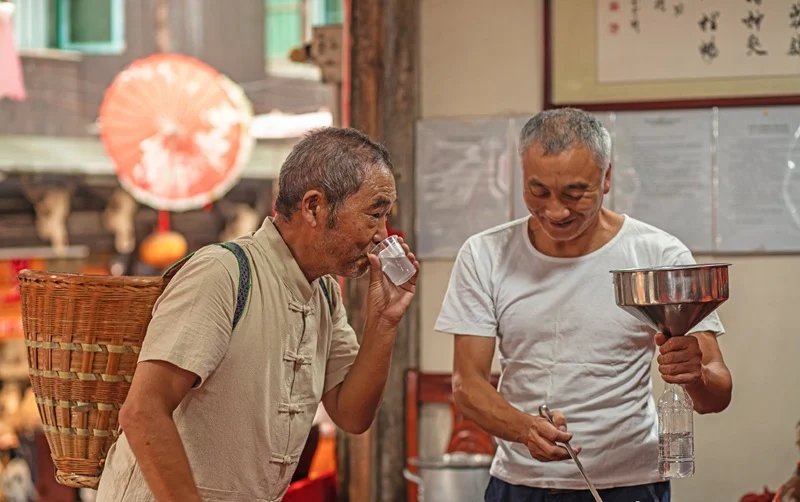
- Corn-based alcoholic drinks: and other local specialties
Food in western Hunan tends to be more strongly seasoned than many dishes in northern or eastern China. If you do not eat spicy food, tell the restaurant before ordering.
Practical Tips for Visiting Furong Town
- Bring shoes with good grip: The old town has slopes, stone paths and steps, and areas near the waterfall can be wet.
- Allow extra time after rain: The waterfall can become much more powerful after heavy rainfall, but paths may also become slippery.
- Consider staying overnight: If you want to photograph both the daytime scenery and the illuminated waterfall, staying overnight is much more relaxed than trying to fit everything into a short day trip.
- Do not judge Furong only from daytime photographs: The town looks quite different after dark.
- Check transportation before you leave: Train schedules can change seasonally and around holidays.
- Traveling with older family members? The town can still be visited, but there are slopes, stairs and uneven sections. A private vehicle and a more relaxed itinerary can make the experience easier.
Is Furong Ancient Town Worth Visiting?
Furong Town is not necessarily a must-see for every traveler. If your main interest is spectacular mountain scenery, Zhangjiajie should take priority. If you want a large historic riverside town with extensive streets, bridges, shops and nightlife, Fenghuang may be more suitable.
Furong Town is particularly interesting if you want something different:
- A historic town built beside a major waterfall
- Traditional Tujia stilt houses
- A glimpse into the history of the Tusi system
- A smaller and more compact old-town experience
- A beautiful waterfall at night
- An easy stop between Zhangjiajie and Fenghuang
For many travelers, the biggest advantage is not choosing between Zhangjiajie, Furong Town and Fenghuang, but seeing how different they are.
Furong Town at a Glance
| Location | Yongshun County, Xiangxi, Western Hunan |
|---|---|
| Best known for | Waterfall, Tujia stilt houses, Tusi history and night scenery |
| Ideal stay | Half a day to one night |
| Best combination | Zhangjiajie → Furong Town → Fenghuang |
| Best time to arrive | Afternoon, if staying overnight |
| Main experience | Waterfall + old town + Tujia culture + evening scenery |
Frequently Asked Questions
Is Furong Ancient Town worth visiting?
Yes, if you are interested in waterfalls, traditional architecture and the cultural history of western Hunan. It is particularly worthwhile when combined with Zhangjiajie and Fenghuang.
How many hours do I need in Furong Town?
Allow around 2–3 hours for a basic visit. Half a day is more comfortable, while an overnight stay is recommended if you want to experience the town after dark.
Should I stay overnight in Furong Town?
If your itinerary allows it, yes. The waterfall and old town look very different after sunset, and staying overnight means you do not have to rush to catch evening transportation.
Is Furong Town the same as Fenghuang Ancient Town?
No. They are quite different. Furong Town is smaller and is centered around its waterfall, Tujia stilt houses and Tusi heritage. Fenghuang is a larger historic riverside town, known for its traditional architecture, waterways, bridges, cultural heritage and extensive night scenery.
Is Furong Town suitable for older travelers?
Yes, but the terrain should be taken into account. There are slopes, steps and uneven paths around the old town and waterfall. Older travelers may find the visit more comfortable with a slower schedule and private transportation.
Does Furong Town have bars?
Yes. There are small bars and music venues around parts of the old town, particularly near the riverside and cliffside areas. The atmosphere is generally relaxed rather than club-oriented. It is more about having a drink, listening to music and enjoying the illuminated town and river scenery.
Can I store my luggage at Furong Town station or scenic area?
Yes, luggage storage options are available near the entrance of the scenic area and around Furongzhen High-Speed Railway Station, making a short 2–3 hour stopover during transit very practical.
Do I need special gear for walking behind the waterfall?
A light raincoat or waterproof cover for your phone and camera can be helpful, especially after heavy rains when water spray is strong. Non-slip walking shoes are highly recommended.
Explore Furong & Western Hunan
Let us handle your train tickets, private vehicle transfers, and local English-speaking guides for a hassle-free trip through Zhangjiajie, Furong, and Fenghuang.